

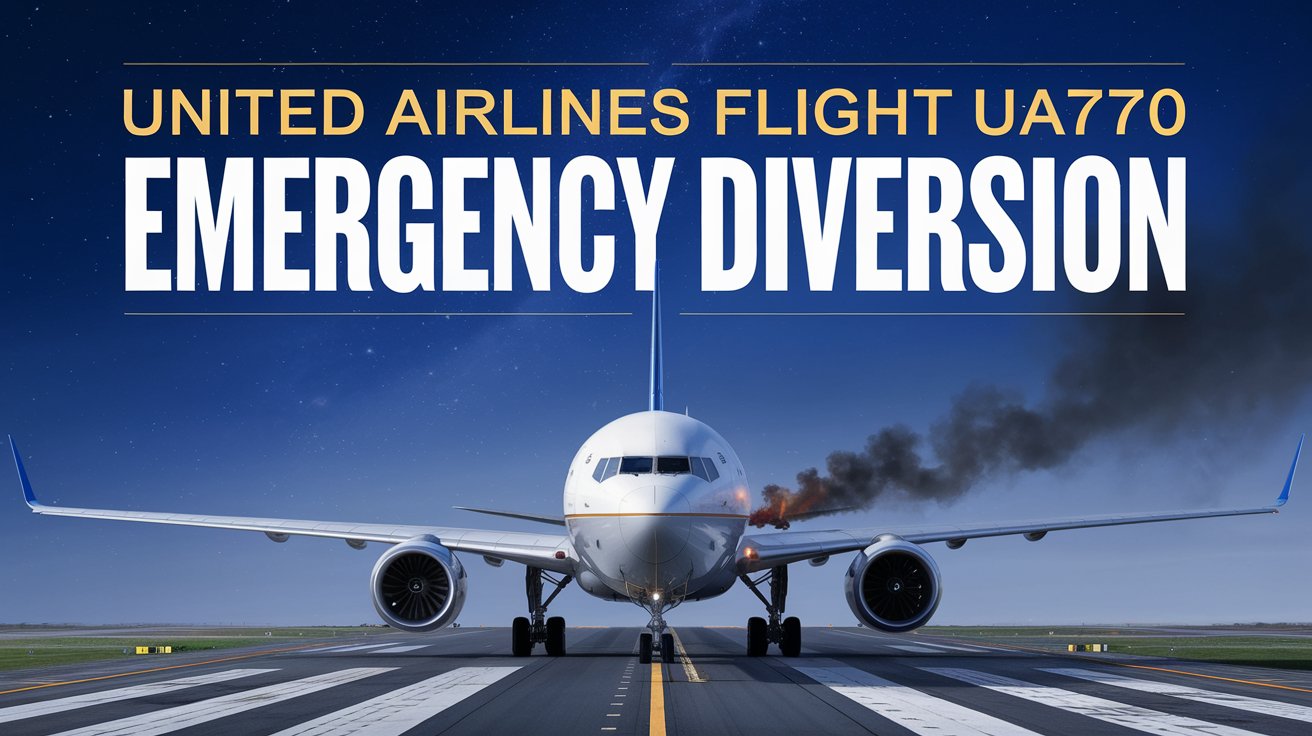
When a Routine Sky Journey Turns Unexpected
Imagine sitting on a plane, your phone buzzes—perhaps a delayed arrival, or a new gate assignment. But then, suddenly, the pilot’s voice comes over: “Brace for an emergency diversion.” That’s what happened aboard United Airlines Flight UA770, transforming a routine trip into a story of high-stakes decision, calm under pressure, and human resilience.
You’ve never felt so jolted in your seat. That moment—when normal becomes urgent—is where our story begins.
What Really Happened on Flight UA770?
Let’s unpack the event that led to United Airlines Flight UA770 emergency diversion—and understand why it grabbed headlines and hearts alike.
A Rapid Change at 35,000 Feet
About two hours into the flight, what started as routine turned critical. Pilots identified a technical issue (later confirmed as a possible hydraulic failure). Within minutes, they coordinated with air traffic control, prepped the cabin crew, and began descent procedures.
They diverted to the nearest suitable airport—prioritizing safety over schedule. And they did it all with composed urgency.
Why did they divert?
Because it’s always better to land safely than risk continuing with a malfunction.
How Did Everyone React?
Here’s where the human element truly shines.
Passengers
- Fear and uncertainty. One moment, you’re watching clouds through your window; the next, you find yourself tightly gripping your armrest.
- Reassurance from crew. Calm, confident verbal updates helped ease anxiety. Flight attendants explained what was happening and asked everyone to stay seated and calm.
Have you ever been on a flight that suddenly turned serious?
It’s disorienting—but feeling that crew sense of control makes all the difference.
Crew & Pilots
- Speed and precision. In a high-pressure scenario, they followed rigorous protocols—trouble-shooting, communicating, coordinating.
- Teamwork. Every person on board knew what role to play—pilots, flight attendants, ground personnel.
Ground Control & First Responders
- Ready at diversion airport. Emergency services, mechanics, and support staff stood by.
- Coordination counts. The entire system—from cockpit to runway—worked like clockwork.
What’s an Emergency Diversion, Really?
Let’s break that down—quickly, clearly.
Unexpected turns, like the United Airlines Flight UA770 emergency diversion, often spark curiosity about how hidden systems work behind the scenes. If you love unraveling puzzles like this, you might enjoy reading What’s the Deal with Pi123? Unraveling Its Mystery!.
Definition & Difference from Other Route Changes
- It’s different from a routine reroute due to weather or airspace traffic.
- An emergency diversion happens when continued flight could jeopardize safety—mechanical problems, medical emergencies, or security threats.
Key Steps in the Process
- Identification of the issue by flight deck or crew
- Decision to divert based on regulations and judgment
- Communication with ATC and chosen airport
- Passenger communication to maintain calm
- Safe landing and, if needed, emergency evacuation
- Post-diversion actions—mechanical checks, flight re-routing, passenger care
Isn’t it impressive how many moving parts align in those critical minutes?

Real-Life Example: UA770 in Context
Stories like United Airlines Flight UA770 emergency diversion show how aviation safety truly works—not just in manuals, but in real time.
Passenger Voices
One passenger later said, “The crew’s calm voice made me feel safe.” Another recalled, “I was so scared… but they walked us through everything.”
These aren’t rehearsed phrases—they’re natural responses under pressure, and they matter.
Media Coverage
News outlets covered the diversion. The headlines focused on the swift crew response and smooth landing. Many praised United Airlines publicly for professionalism. External accounts emphasized how safety protocols aren’t just words—they’re action.
What Lessons Can We Take Home?
Let’s distill this story into meaningful takeaways.
Just like aviation depends on reliable systems for safety, energy solutions also hinge on trust and innovation. If you’re curious about sustainable choices, check out Is Hamro Solar LLC the Solar Solution You’ve Been Waiting For?.
Human Connection Wins
- A calm voice from the flight attendant or pilot can ease collective fear.
- Clear updates—even brief—help people feel included instead of left in the dark.
Training Meets Real Life
- Protocols aren’t theoretical; they’re roadmaps in high-pressure situations.
- Regular drills (simulator training, emergency preparedness) pay off when every second counts.
Infrastructure Matters
- An airport’s readiness—mechanics, medics, evacuation teams—can be lifesaving.
- Seamless communication between plane, tower, and ground staff avoids chaos.
You, the Passenger, Have Power Too
- Listen closely.
- Stay calm.
- Follow instructions.
- Small actions—like buckling up when asked or moving calmly—matter more than you think.
Quick Takeaways: What Makes a Diversion Work Smoothly?
| Factor | Why It Matters |
|---|---|
| Expert Crew Response | Keeps everyone safe under pressure. |
| Passenger Communication | Reduces panic, builds trust. |
| Efficient ATC Coordination | Ensures a safe, quick path to a diversion airport. |
| Ground Readiness | Speedy landing, support, and problem resolution. |
| Training & Protocols | Preparedness is everything in an unexpected scenario. |
Could It Have Gone Worse—or Better?
Sure. But numerous small actions—crew calm, passenger cooperation, airport readiness—turned a perilous moment into a safe landing.
What if the crew had panicked?
Passengers might, too. That’s scary.
But every one of these people did their job with professionalism—and for that, flight UA770’s diversion ended not in tragedy, but in safe arrival.

Why This Story Matters to You
Maybe you don’t fly often. Maybe you dread it. But here’s the reassurance:
- Your safety is the top priority.
- Every person on that flight—from pilots to responders—acted fast and professionally.
- In the sky, extraordinary events can become ordinary outcomes—if everyone performs their role well.
So next time you’re on a flight—or just hopping on a bus or train—remember: systems and people are always working hard behind the scenes.
Final Thoughts
United Airlines Flight UA770 emergency diversion isn’t just a news item. It’s a reminder that in moments of uncertainty, training, communication, and calm can safeguard lives.
It’s also a reminder that ordinary moments—like flying—may contain extraordinary stories.
Stay curious. Stay observant. Because the next time you hear a pilot’s calm voice, you may be witnessing navigation at its most human.